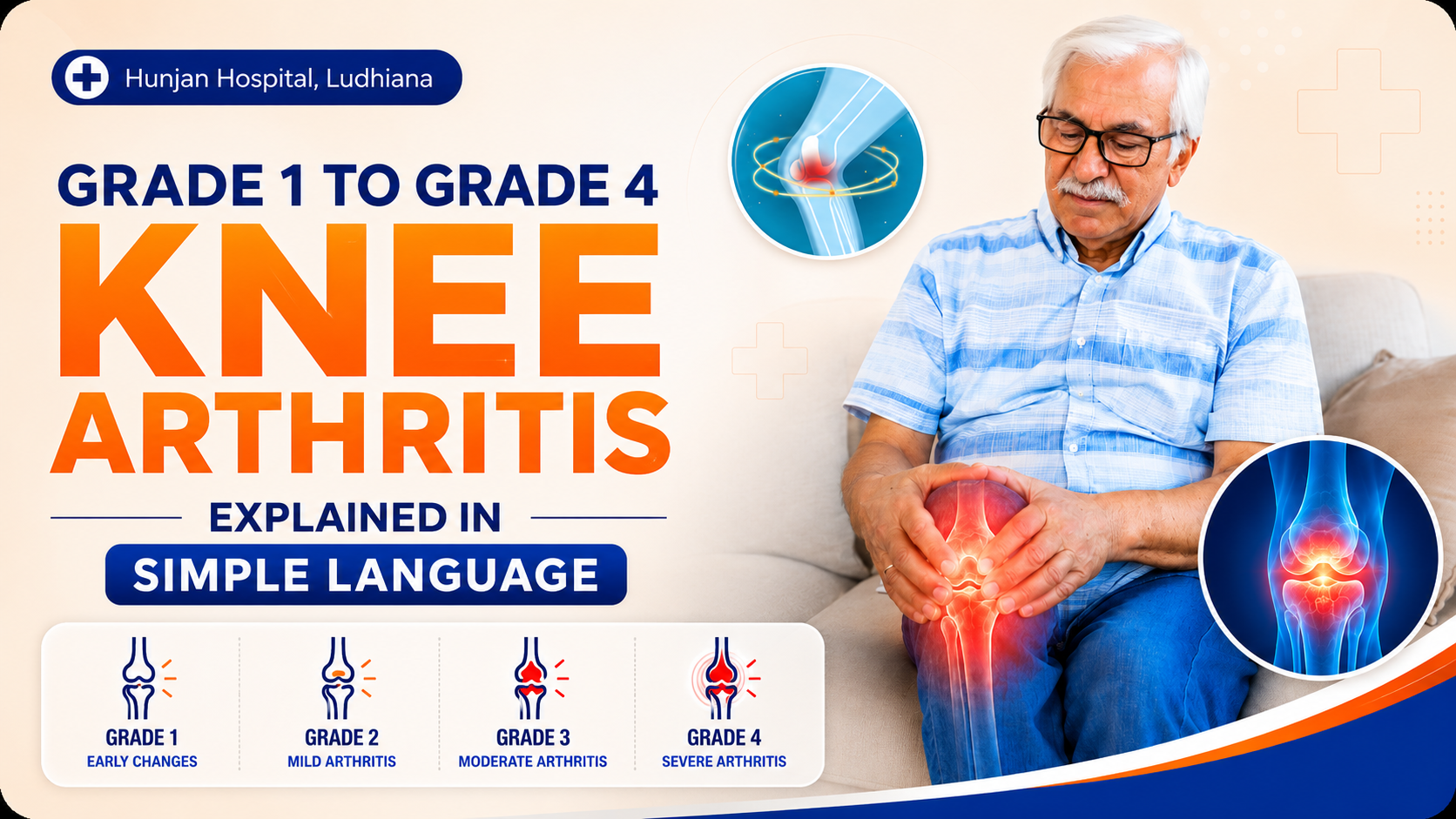
What is Knee Arthritis?
Knee arthritis is a condition where the smooth cartilage inside the knee joint starts wearing down over time. This cartilage normally allows the bones to move smoothly without friction. When it becomes thin or damaged, the movement of the joint is affected, leading to pain, stiffness and difficulty in daily activities.
It usually develops gradually. Many people ignore early symptoms because the discomfort comes and goes. Over time, the condition can progress and start affecting routine movement like walking, climbing stairs or standing for long periods.
Why understanding grades is important
Knee arthritis is divided into grades to describe how much damage has happened inside the joint. These grades help doctors decide the right treatment approach.
It is important to understand that the grade does not always match the pain level exactly. Some people may have mild damage but significant discomfort, while others may have advanced arthritis but tolerate it better.
Knowing the stage helps in planning treatment early and avoiding unnecessary delay.
Grade 1 Knee Arthritis (Very Early Stage)
At this stage, the joint still looks almost normal, but small changes have started.
- Slight wear in cartilage may begin
- Joint space is mostly preserved
- Occasional mild pain or discomfort
- Stiffness after long sitting or inactivity
- No major limitation in movement
Many people do not realise they have arthritis at this stage. Symptoms are usually mild and irregular.
What helps at this stage:
Lifestyle changes, weight control, regular exercise and basic physiotherapy can help slow down progression.
Grade 2 Knee Arthritis (Mild Stage)
This is the stage where changes inside the joint become more noticeable.
- Cartilage thinning starts becoming visible
- Mild bone changes may appear
- Pain becomes more frequent, especially after activity
- Stiffness may be noticed in the morning or after rest
- Movement is mostly normal but not completely comfortable
People often start adjusting their activities at this stage without realising it.
What helps at this stage:
Physiotherapy, strengthening exercises, activity modification and medical management can help control symptoms.
Grade 3 Knee Arthritis (Moderate Stage)
At this stage, the joint damage becomes more significant and starts affecting daily life.
- Cartilage loss becomes more evident
- Bone surfaces may start rubbing against each other
- Pain during walking, standing or climbing stairs
- Noticeable stiffness and reduced flexibility
- Swelling may be present at times
- Daily activities start becoming difficult
Ignoring symptoms at this stage often leads to faster progression.
What helps at this stage:
Along with physiotherapy and medication, certain advanced treatments may be considered depending on the condition and patient needs.
Grade 4 Knee Arthritis (Severe Stage)
This is the advanced stage where the joint is significantly affected.
- Cartilage is severely worn out
- Bones may be directly rubbing against each other
- Persistent pain even at rest
- Difficulty in walking or standing
- Reduced joint movement
- Deformity such as bowing of the leg may develop
At this stage, the quality of life is often significantly affected.
What helps at this stage:
When conservative treatment no longer provides relief, knee replacement surgery may be considered to restore movement and reduce pain.
What people often misunderstand
- Knee pain does not always mean advanced arthritis
- Early stages can be managed without surgery
- Delaying treatment can worsen the condition
- Exercise is usually helpful, not harmful when done correctly
- Surgery is not the first option, but it may be the right option in advanced stages
Understanding these points helps in making informed decisions.
When should you consult a doctor?
You should not wait for the pain to become severe. Early consultation helps in better management.
- Pain lasting for weeks
- Difficulty in daily movement
- Stiffness that does not improve
- Swelling or instability in the knee
- Reduced ability to walk comfortably
Timely evaluation helps in choosing the right treatment at the right stage.
Treatment approach at Hunjan Hospital
At Hunjan Hospital, knee arthritis is managed based on the stage of the condition and individual patient needs. The focus is on improving movement, reducing discomfort and maintaining joint function.
Treatment may include:
- Physiotherapy and strengthening programs
- Lifestyle and activity guidance
- Medical management
- Advanced orthopedic treatments when required
- Robotic-assisted knee replacement in suitable cases
With 40 years of orthopedic experience and 23,000+ joint replacements, the approach is structured, patient-focused and aimed at long-term outcomes.
Final thought
Knee arthritis is a gradual condition, but early understanding can make a significant difference. The goal is not just to treat pain but to maintain movement and quality of life.
Recognising the stage of arthritis helps in taking the right steps at the right time, whether it is exercise, medical care or surgical treatment.
Medical Disclaimer: The information in this article is for educational purposes only and does not replace professional medical advice, diagnosis, or treatment. Always consult a qualified doctor for medical concerns or treatment decisions. Outcomes may vary from patient to patient.
Leave a Reply