Tag: Orthopedics

  • What Makes a Good Orthopedic Hospital? 7 Things to Check Before You Choose

    What Makes a Good Orthopedic Hospital? 7 Things to Check Before You Choose

    Choosing the right hospital for a knee replacement, hip surgery, or spine treatment is one of the most important decisions you’ll make. The outcome depends not just on the procedure itself, but on the team, technology, and support around it.

    Here are 7 things worth checking before you decide.

    1. The Surgeon’s Qualifications and Experience

    The surgeon performing your procedure matters more than anything else. Look for formal orthopedic qualifications – MBBS, MS (Orthopaedics), or M.Ch – and check how long they have been practicing.

    At Hunjan Super Speciality Hospital in Ludhiana, Dr. Balwant Singh Hunjan holds MBBS, MS (Orthopaedics), and M.Ch (Orthopaedics) and has over 38 years of patient-first orthopedic experience. Dr. Jaiveer Singh Hunjan, a consultant orthopedic surgeon with 6+ years of experience in robotic knee and traditional surgery, specializes in arthroscopy, arthroplasty, trauma surgery, and robotic-assisted joint replacement.

    A surgeon who has done hundreds – or thousands – of a specific procedure is simply in a better position to handle complications and deliver consistent results.

    2. The Volume of Procedures Performed

    Numbers matter in surgery. Hospitals that perform a high volume of joint replacements develop refined processes, experienced support teams, and better outcomes over time.

    Hunjan Hospital has completed 8,000+ knee replacements and 15,000+ hip replacements. These are not small numbers – they reflect decades of focused orthopedic work at a single institution.

    When researching a hospital, ask specifically how many of your procedure type they perform each year, not just overall.

    3. Access to Advanced Technology

    Technology like robotic-assisted surgery has changed what’s possible in orthopedics. Robotic systems allow surgeons to plan and execute with greater precision, which can mean better implant alignment, less soft tissue damage, and faster recovery.

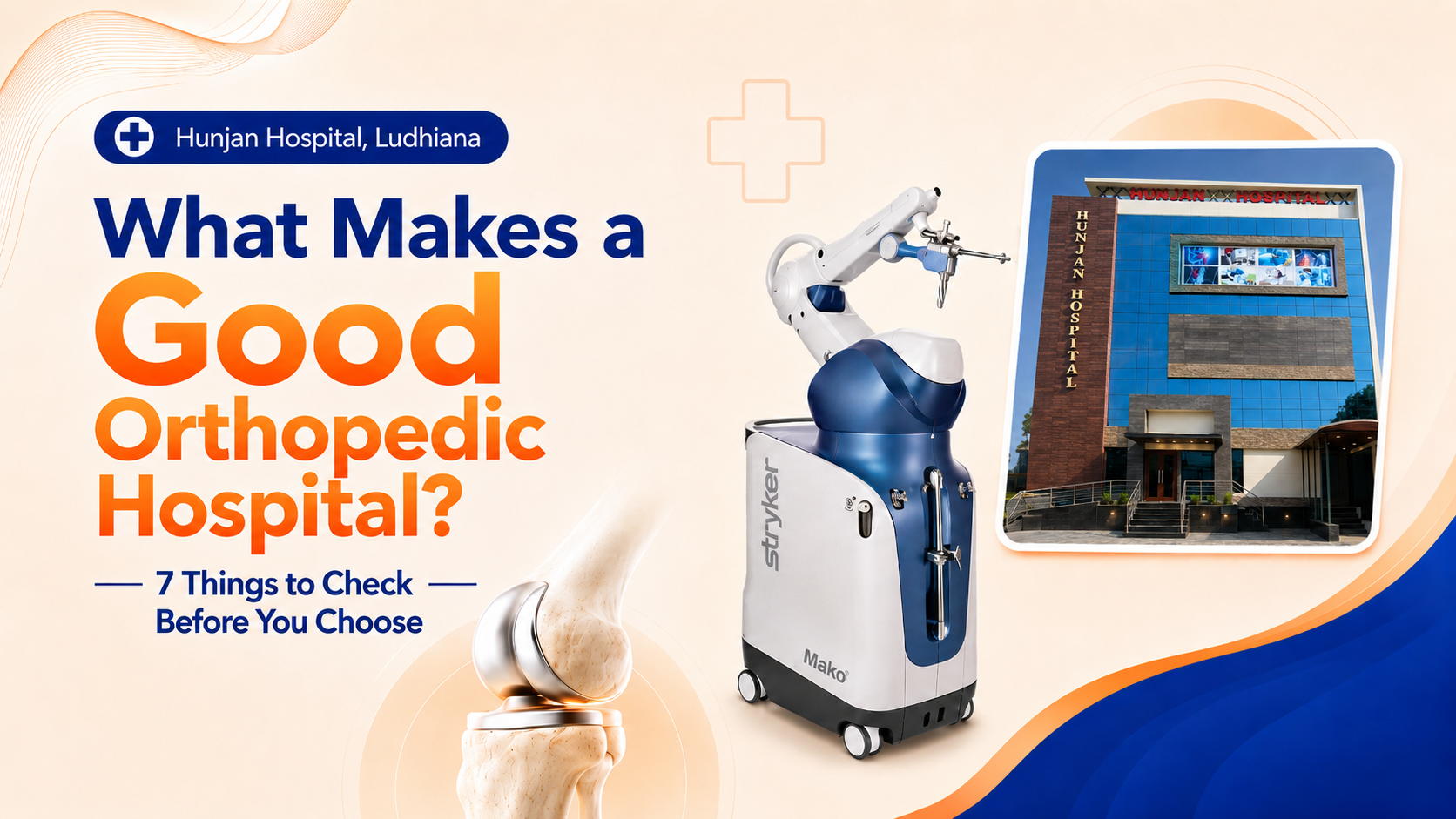
    Hunjan Hospital performed the first true robotic knee replacement in North India and continues to offer robotic-assisted procedures today. Not every hospital in Punjab has this capability – it’s worth asking directly whether the hospital you’re considering has it, and how regularly they use it.

    4. Accreditation and Safety Standards

    Hospital accreditation is an independent measure of whether a hospital meets defined standards of patient safety, hygiene, and quality of care.

    Hunjan Super Speciality Hospital is NABH Pre-Accredited (National Accreditation Board for Hospitals & Healthcare Providers). This means the hospital has been assessed against national standards and found to meet them – which matters especially when you or a family member is going under anesthesia.

    Always check whether a hospital is NABH-accredited or NABH pre-accredited before making a decision.

    5. Insurance and Cashless Facility

    Orthopedic surgery can be expensive. A good hospital should make the financial side as stress-free as possible – that means working with your insurer and offering cashless treatment so you’re not paying large amounts upfront and waiting for reimbursement.

    Hunjan Hospital is empanelled with 100+ insurance brands, including Star Health, HDFC ERGO, ICICI Lombard, Bajaj Allianz, Tata AIG, SBI General, and many others. Cashless facility is available, which means the hospital settles directly with the insurer on your behalf.

    Before you book, confirm your specific insurance plan is accepted and whether the procedure qualifies for cashless treatment.

    6. In-House Physiotherapy and Rehabilitation

    Surgery is only half the recovery. How you rebuild strength, mobility, and confidence in the weeks after an operation has a major impact on your long-term outcome.

    A good orthopedic hospital will have structured physiotherapy on-site, not just refer you elsewhere. Hunjan Hospital offers dedicated physiotherapy and rehabilitation services as part of its care model, so patients move from surgery to recovery within the same facility under connected supervision.

    Ask any hospital what post-operative rehabilitation looks like before you choose.

    7. Genuine Patient Reviews

    Reviews from real patients give you something that no brochure can – an honest picture of what the experience is actually like. Look at Google reviews, video testimonials, and what families say about communication, staff attitude, and follow-up care.

    Hunjan Hospital has published a range of patient testimonials in video and written form. Recurring themes in reviews include clear communication from the medical team, a calm and professional environment, and structured follow-up support after surgery.

    One thing to watch for: a hospital with many reviews over a long period is more reliable than one with a burst of recent ratings.

    Making the Decision

    No single factor decides this. A hospital with great technology but limited experience in your specific procedure isn’t the right choice. Neither is one with an experienced surgeon but poor post-operative support.

    The best orthopedic hospitals combine qualified surgeons, proven track records, modern equipment, recognized safety standards, financial transparency, and end-to-end care from diagnosis through rehabilitation.

    If you’re looking for orthopedic care in Ludhiana or Punjab, Hunjan Super Speciality Hospital can be reached at 8556024365 or through their website at hunjanhospital.com. Appointments and free consultations are available.

    Disclaimer: This article is intended for general informational purposes only and does not constitute medical advice. Every patient’s condition is different – please consult a qualified orthopedic surgeon before making any decisions about treatment or surgery.
  • The Future is Now: Six Things to Consider Before Joint Replacement Surgery

    The Future is Now: Six Things to Consider Before Joint Replacement Surgery

    Joint replacement surgery, once a last resort for debilitating pain and immobility, has transformed into a highly advanced and increasingly personalized medical intervention. As we look towards the future of orthopedics, the landscape is evolving at an unprecedented pace, promising even better outcomes, faster recoveries, and longer-lasting solutions. If you’re considering joint replacement, understanding these emerging trends is crucial to making an informed decision.

    Here are six things to consider before embarking on your joint replacement journey, viewed through a futuristic lens:

    1. Personalized Precision: The Age of AI and Robotics in Surgical Planning

    Gone are the days of one-size-fits-all surgery. The future of joint replacement is deeply rooted in personalization. This begins long before you even enter the operating room.

    Trend/Futuristic Approach:


    AI-Assisted Diagnostics and Pre-operative Planning:

    Artificial intelligence (AI) algorithms are becoming increasingly sophisticated in analyzing medical images (MRI, CT scans) and patient data. This allows for highly accurate diagnoses of joint conditions and the creation of optimal, patient-specific surgical plans. Imagine an AI that can predict the exact wear patterns of your joint and recommend the most suitable implant design and placement for your unique anatomy and lifestyle.


    Robotic-Assisted Surgery with Augmented Reality:

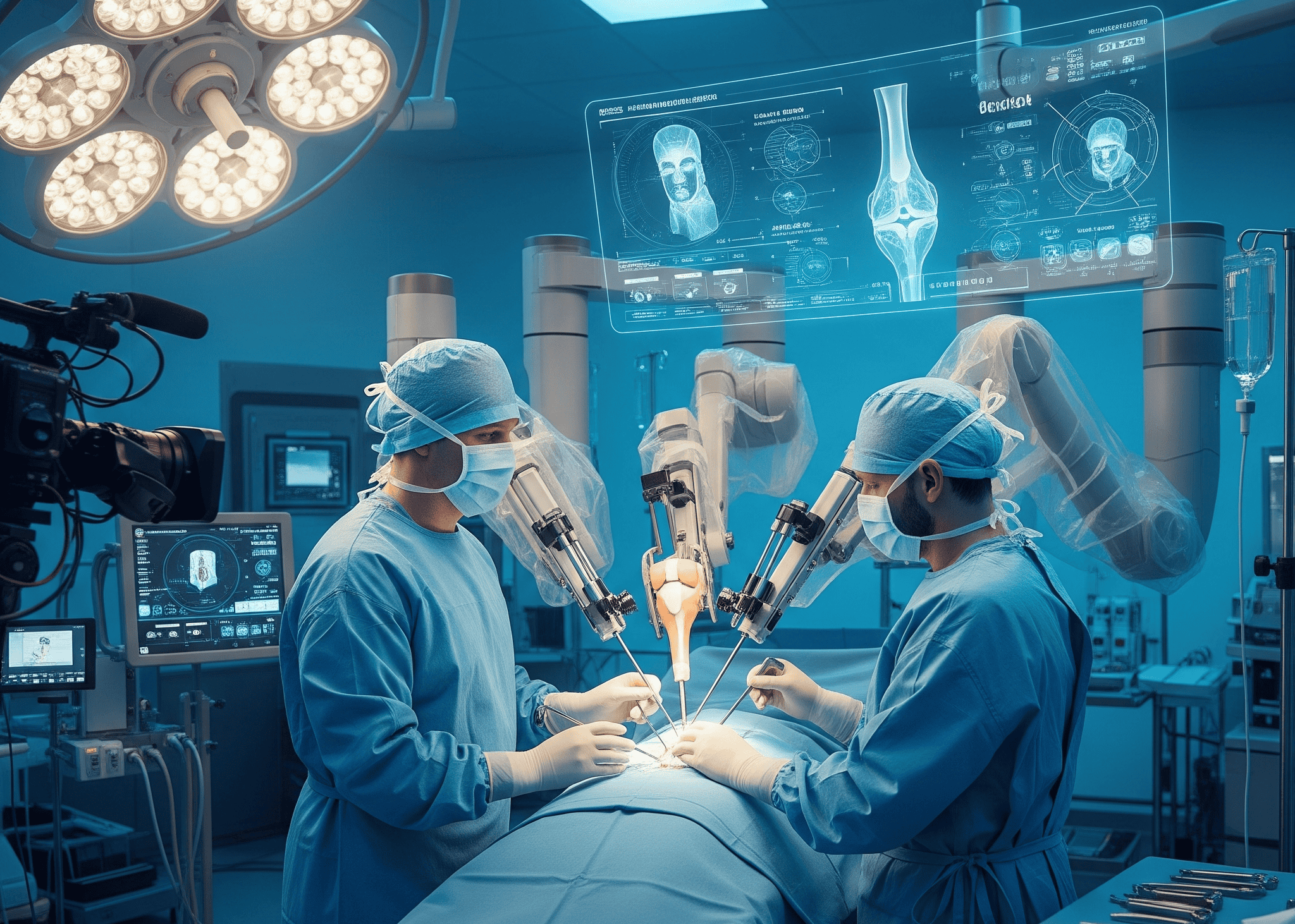
    Robotic-assisted systems are no longer novelties; they are becoming standard. These robots, controlled by skilled surgeons, offer unparalleled precision in bone cutting and implant positioning, leading to improved alignment and reduced tissue damage. The integration of augmented reality (AR) during surgery allows surgeons to overlay detailed 3D images of your joint onto the real-time surgical field, further enhancing accuracy. This “GPS for
    your surgeon” ensures that your new joint is placed with microscopic precision, potentially improving long-term outcomes and reducing revision rates.


    3D-Printed Custom Implants:

    The days of choosing from a limited range of off-the-shelf implants are fading. Advanced 3D printing technology allows for the creation of custom-made implants that perfectly match your joint’s unique shape and size. This is particularly beneficial for complex cases or revision surgeries, ensuring a more natural fit and potentially better biomechanics. The future might even see implants engineered with porous structures that encourage natural bone ingrowth, further strengthening the bond between your body and the prosthetic.

    The Future is Now: Six Things to Consider Before Joint Replacement Surgery

    2. Smart Implants and Connected Care: Monitoring Your Recovery from Within

    The post-operative phase is also undergoing a revolution, with technology enabling unprecedented insights into your recovery.

    Trend/Futuristic Approach:


    Integrated Smart Sensors:

    Imagine your new joint communicating with your healthcare team. Smart implants, embedded with tiny sensors, are becoming a reality. These sensors can track your activity levels, joint movement, temperature, and even signs of inflammation in real-time. This continuous monitoring allows your doctor to remotely track your progress, adjust your rehabilitation plan as needed, and identify potential issues early, often before they become major complications.


    Wearable Technology and Tele-rehabilitation:

    Wearable devices, like smartwatches and specialized sensors, will play an even larger role in post-operative care. They can provide personalized feedback on your rehabilitation exercises, guide you through your recovery milestones, and even connect you virtually with your physical therapist. This “tele-rehabilitation” can reduce the need for frequent in-person follow-up visits, making recovery more convenient and accessible, especially for patients in remote areas.


    Predictive Analytics for Outcomes:

    The data collected from smart implants and wearables, combined with your individual health profile, will feed into AI-powered predictive models. These models can anticipate potential challenges in your recovery, identify patients at higher risk of complications, and optimize treatment pathways, leading to more proactive and personalized care.

    3. Advanced Biomaterials: Implants Built to Last (and Adapt)

    The materials used in joint replacements are constantly evolving, leading to more durable, biocompatible, and even regenerative solutions.

    Trend/Futuristic Approach:


    Novel Materials with Enhanced Durability and Biocompatibility:
    Researchers are developing new generations of materials beyond traditional metals (titanium alloys, cobalt-chromium) and polyethylene. This includes advanced ceramics (like silicon nitride for its strength and toughness), highly cross-linked polyethylene (HXLPE) for superior wear resistance, and even bio-absorbable materials that gradually degrade as natural tissue regenerates.


    Self-Healing and Adaptive Implants:

    The future may hold “smart” biomaterials that can adapt to the body’s changing needs or even self-heal minor damage over time. This could involve materials that release anti-inflammatory agents or growth factors to promote tissue integration and reduce the risk of complications.


    Surface Coatings for Optimal Integration:

    Innovative surface coatings, like hydroxyapatite (HA) to promote bone ingrowth, or titanium nitride (TiN) and diamond-like carbon (DLC) for improved wear and corrosion resistance, are enhancing the longevity and integration of implants. The goal is to create a seamless interface between your natural bone and the prosthetic, minimizing the risk of loosening and infection.

    4. Regenerative Medicine: Beyond Replacement, Towards Restoration

    While replacement remains a cornerstone, the orthopedic field is increasingly exploring ways to regenerate and repair damaged joint tissue, potentially reducing or delaying the need for full replacement.

    Trend/Futuristic Approach:


    Stem Cell Therapies for Joint Regeneration:

    Stem cell therapies hold immense promise in stimulating the body’s natural healing processes to repair damaged cartilage and bone. While still largely in experimental stages for widespread joint regeneration, advancements in this area could significantly alter the treatment landscape, offering a less invasive alternative for some patients.


    Tissue Engineering and Bioprinting:

    Imagine “growing” a new joint! Tissue engineering techniques involve creating biomimetic scaffolds that encourage the regeneration of healthy joint tissue. Bioprinting, a cutting-edge technology, allows for the precise layering of cells and biomaterials to construct functional tissues, potentially leading to truly biological joint replacements in the distant future.


    Minimally Invasive Techniques and Outpatient Surgery:
    Advances in surgical techniques, often facilitated by robotics and advanced imaging, are leading to smaller incisions, less tissue disruption, and faster recovery times. This shift is enabling more joint replacement procedures to be performed in outpatient or ambulatory settings, allowing patients to return home the same day as their surgery, significantly reducing hospital stays and associated risks.

    5. Prehabilitation and Accelerated Recovery Protocols: A Proactive Approach

    The preparation and recovery phases are just as crucial as the surgery itself, and both are benefiting from a data-driven, proactive approach.

    Trend/Futuristic Approach:


    Personalized Prehabilitation Programs:

    Before surgery, “prehab” programs, often guided by AI and wearable technology, are tailored to your individual needs. These programs focus on strengthening surrounding muscles, improving range of motion, and optimizing your overall health, leading to better surgical outcomes and a smoother recovery.


    Gamified Rehabilitation:

    To enhance patient engagement and adherence, rehabilitation programs are increasingly incorporating gamification elements. Interactive apps and virtual reality (VR) exercises can make physical therapy more enjoyable and effective, providing real-time feedback and progress tracking.


    Optimized Pain Management and Enhanced Recovery After Surgery (ERAS) Protocols:

    ERAS protocols, which emphasize multi-modal pain management, early mobilization, and optimized nutrition, are becoming standard. The future will see even more precise pain control strategies, potentially utilizing predictive algorithms to anticipate pain levels and administer targeted interventions, minimizing reliance on opioids.

    6. The Evolving Patient-Physician Partnership: Shared Decision-Making in a Data-Rich Environment

    The relationship between patients and their healthcare providers is becoming more collaborative, empowered by access to information and advanced tools.

    Trend/Futuristic Approach:


    Data-Driven Shared Decision-Making:

    With the wealth of data from smart implants, wearables, and predictive analytics, patients will have a clearer understanding of their individual risks, benefits, and expected outcomes. This transparency will foster a more informed and collaborative decision-making process between patients and their surgeons.


    Long-Term Monitoring and Proactive Intervention:

    The concept of “set it and forget it” for joint replacements is being replaced by continuous monitoring. Your healthcare team will have access to long-term performance data of your implant, allowing for proactive interventions if any issues arise, potentially extending the lifespan of your joint replacement and preventing complications.


    Focus on Quality of Life and Functional Outcomes:

    Beyond simply relieving pain, the future of joint replacement focuses on maximizing your quality of life and enabling you to return to the activities you love. The metrics for success are expanding beyond implant longevity to include patient-reported outcomes on function, activity levels, and overall well-being.

    Joint replacement surgery is on the cusp of an incredible transformation. By understanding these six key considerations and embracing the technological advancements that are shaping the future of orthopedics, you can approach your decision with confidence, knowing that you’re stepping into an era of unprecedented precision, personalization, and potential for a truly restored quality of life.