Author: Hunjan_Hospital

  • What Is Low Back Pain, Its Common Symptoms, Causes And Treatment?

    What Is Low Back Pain, Its Common Symptoms, Causes And Treatment?

    What Is Low Back Pain?

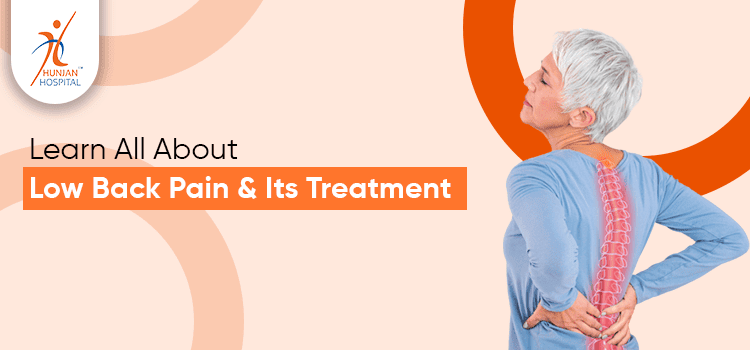
    The low back or the lumbar spine is the area where the bones, joints, ligaments, nerves and muscles interlink together in order to give support to the upper body. Besides that, it also provides flexibility to the body, such as twisting, bending, walking and controlling all kinds of leg movements. It also performs the necessary functions of locomotion in the body.

    However, there might come a time in an individual’s life when they might experience slight to severe low back pain at one point. Visit an Orthopaedic Hospital in Punjab to diagnose and treat the issue accordingly.

    In this blog, we will focus on the symptoms, causes and treatment of lower back pain.

    What Are The Common Symptoms Of Lower Back Pain?

    If you can identify the signs and symptoms of lower back pain, it might help the Ortho surgeon in Punjab find the real cause of the pain. This process allows them to treat the issues quickly without any difficulty.

    The common symptoms of low back pain vary from dull aching pain in the lumbar spine or lower back to a burning sensation with pain that spreads to the thighs into the feet and legs.

    The pain that most people feel when they perform a heavy exercise or when they experience an injury to the disc, muscles or ligaments for a very short period of time. Then they might have acute lower back pain. In case the pain prolongs for over a month or so, then the doctor will diagnose it as chronic.

    In case you have experienced severe pain post an injury, we highly recommend you to consult the Best Ortho Doctor in Punjab as it might worsen with time if left untreated.

    Sciatica Or Muscle Pain?

    Sciatica is basically a nerve pain that starts in the lower back, and after that, it travels down to the leg via the buttocks. In most cases of sciatica, the patient experiences pain only on one side of the body. Besides that, they might also feel weakness and numbness in the back of the leg and face trouble while changing postures.

    What Are The Causes Of Back Pain?

    There are various reasons to experience lower back pain. However, the most common include:

    1. Strenuous workout regime that might often damage the muscles.
    2. Having a bad posture for a very long period of time.
    3. Undergoing any sudden fall or having an injury to the lower back.
    4. Working in any job requires extreme physical activity, especially if it places too much pressure on your lower back.
    5. If you sit in a place for hours without getting up and taking a break in between for some movements.
    6. If you are overdoing heavy lifting.
    7. Slouching
    8. Exercising after a long period of time of inactivity can also often lead to acute low back pain.

    On the other hand, chronic low back pain is a problem due to some issue in the joint, disc or the affected nerve. Some of the causes of chronic low back pain include:

    1. Degenerative disc diseases
    2. Facet joint dysfunction
    3. Lumbar herniated disc
    4. Deformity
    5. Compressed fracture
    6. Spondylolisthesis


  • A detailed guide to taking proper care of yourself after hip replacement

    A detailed guide to taking proper care of yourself after hip replacement

    Recovery after hip replacement surgery

    Undergoing surgery means taking good care of yourself. Otherwise, the results are not fruitful in the way you want. In case you have undergone Hip Replacement Surgery in Ludhiana, you must take proper care so that your body recovers like normal. Ideally, you need to give yourself a few weeks or months to recover from a hip replacement. Surgery aims to help the hip joint get its normal functioning back.

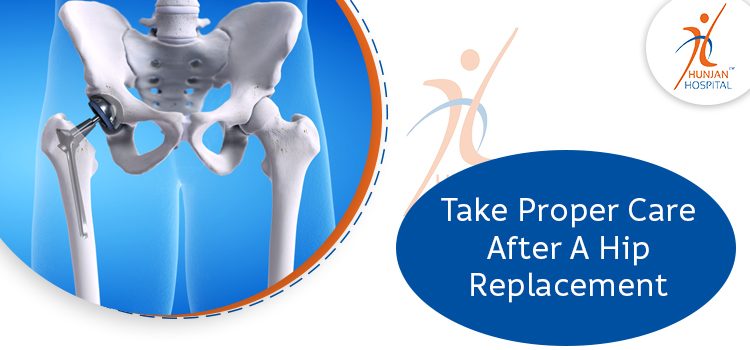
    When you visit the Ortho Hospital in Ludhiana, the surgery requires removing the hip joint, sawing the femur head & hollowing the natural socket with the new head. The socket needs proper placement in the pelvis and artificial joint into the respective sections – Cup and stem. The choice of hip replacement is an essential consideration to improve overall functionality.

    What happens after hip replacement surgery?

    Hip replacement surgery is an essential procedure. After the surgery, you are under the effect of anesthesia. A triangle-shaped pillow between the legs is kept to make the position right. The wound is properly dressed.

    You will feel a sensation in your leg after 1 hour. You need to take some medications to reduce the severity of the pain. Make sure that you exercise properly after the surgery to help your hip regain strength.

    How is the routine after getting discharged from the hospital?

    For every person, the recovery varies a lot. The timeline for recovery varies depending on weight, age, physical health, and damage. You need to take proper care after recovery and do things the way your surgeon has told you. Please use the walking aids as suggested by the surgeon. And do take into account all the other suggestions. The small things are crucial for success.

    How to manage your home for recovery?

    You need to manage your home in every possible bit. You must exercise and do all other activities as told by the doctor. Post-discharge care is indeed essential for successful results. The full recovery after hip replacement surgery takes time like:

    • After the hip replacement surgery, it’s normal to feel fatigue and tiredness. Additionally, you need to adjust everything to get things resolved. It takes around six weeks for you to resolve tiredness.

    • Make sure to follow the exercise suggested by your physiotherapist. Exercise at least 3 to 4 times a day. It’s better to make this habit last six weeks to strengthen the muscles and help offer joint support.

    • Swelling takes months to resolve. But, if you notice getting it worse, then consult the doctor right away.

    • Take help from your loved ones to do activities like cooking, cleaning, bathing, and running errands.

    How soon can I get back to my daily regime after hip surgery?

    6 weeks after surgery

    3 months after surgery

    6 months after surgery

    • Swimming (not breaststroke)

    • Water aerobics

    • Gentle exercise bike

    • Driving

    • Gentle jogging

    • Cycling

    • Swimming (breaststroke)

    • Aerobics

    • Bowls

    • Manual work

    • Gentle gardening

    • Racket sports

    • Yoga, Tai Chi, Pilates

    • Lifting weights

  • What things to consider when the child breaks or fractures a bone?

    What things to consider when the child breaks or fractures a bone?

    Child fracture or bone: What things should you consider?

    You must take the necessary step on time when the child breaks or fractures a bone. Most importantly, the child needs to feel better so get the situation addressed on time. In that case, it’s important to visit one of the top-rated Ortho Hospital in Punjab to get your child the finest possible care. There’s a possibility that the surgery won’t be needed all the time. Bear in mind that every child’s situation varies from one another, so it’s essential to make the necessary decision depending on the same.

    Important things to consider when a child breaks or fractures a bone

    Factor 1: Age

    When you visit the Child Bone Specialist In Ludhiana, the doctor will consider your age. This is because the way bone breaks with age varies greatly, and its healing capacity is different. Suppose there’s a fracture in a six years old and 20-year-old adult, then both of them are treated differently. The growth plates are different and might require the body some great amount of time to recover with ease. So, it’s essential to properly check the growth plates depending on the age.

    Factor 2: Level of maturity

    Bone maturity is different for every child. Some might have advanced bones as compared to their age and vice-versa. So, to make the bone heal the best way possible, it’s important to consider the maturity level. The ortho doctor does analyze if the child is close to puberty. A cast or splint is an appropriate choice if the child breaks his or her arm. The arms need to be aligned to aid the healing process.

    Factor 3: Fracture pattern

    For every fracture or break, the type of treatment required varies a lot. In case of thigh bone fracture, there’s a possibility of surgical treatment. On the other hand, for a broken wrist chance of surgical intervention are less.

    Fracture 4: Choice of equipment

    The ortho doctor does give importance to the type of equipment required. As there are several options available, it’s essential to select the one that’s most suitable surgical implants are not a reliable choice for a child fracture. Surgery is for adverse situations or when other things don’t work. There’s a possibility to have specially designed implants, but in rare cases.

    Factor 5: Chances of surgery

    Surgery comes with risks, and it’s important to get a proper understanding of the same. No doubt, the kids’ bone healing capacity is exceptional, but surgical intervention won’t be the right choice. Stats have shown that only 10% of individuals need surgery. The risks of the surgery are similar to any other normal surgery.

  • How to boost the success of total hip replacement surgery?

    How to boost the success of total hip replacement surgery?

    Recovery following hip replacement surgery

    Following surgery, it’s crucial that you maintain a proper lifestyle, follow a healthy diet plan, and take every possible suggestion given by your Orthopaedic surgeon In Ludhiana. If you have undergone hip replacement surgery, you must take every necessary recovery measure to bring greater ease. When you are cautious about the recovery timeline, the results are effective.

    Ortho doctor tips on, ‘How to improve hip replacement surgery?’

    You must get yourself carefully through recovery from the Hip replacement surgery in Punjab. Here are some of the necessary recovery tips suggested by the doctor after the hip replacement:

         Follow an exercise regime

    Keep yourself healthy and fit after the surgery. Your ortho doctor will carefully suggest the right kind of exercise regime that’s required after you have been discharged from the Orthopaedic Hospital in Punjab. Moreover, exercise helps to increase blood flow.

         Movement is essential after surgery

    To succeed in hip replacement surgery, you must resume your daily activities within 3 to 6 weeks. Follow light activity and exercise programs after the surgery to achieve successful results. The success of the recovery depends on body movement. If you have any doubt, talk to the Orthopaedic surgeon about the same.

         A healthy diet and normal body weight

    Following a healthy diet plan is essential after the surgery. You need to follow a nutritious diet plan so that it’s easier to have the desired results of hip replacement surgery. If you cannot figure out what your balanced diet plan should be, then get help from the dietician. Keep your body weight under control; otherwise, recovery can be complex.

         Organize your home

    Before the surgery or. This way, when you come back after the recovery, you don’t have to stress yourself too much. So, make sure to keep things that are in your access. Moreover, get the errands run in advance so there’s no hustle & bustle when you get back home. The small changes are the effective methods to alleviate the success of the surgery.

    Which are the exercises you should add to your daily life?

    A few helpful exercises boost the recovery timeline of hip replacement. Here are some of the necessary exercises you should follow after the hip replacement surgery:

         Motion exercise for legs that helps to promote full leg motion

         The regular squeezing of calf and thigh

         Trying to walk with or without a supportive device like a cane or walker

    Final word


    If you need further information about the surgery and want to plan for the entire process, schedule an initial consultation at Hunjan Super Speciality Hospital. The expert team of ortho doctors will guide you on what you should do next. So, please feel free to discuss anything with the doctor. 

  • Rheumatoid Arthritis Severity Scale To Measure Disease Activity

    Rheumatoid Arthritis Severity Scale To Measure Disease Activity

    What Is Rheumatoid Arthritis?

    Rheumatoid arthritis is a chronic disease. It is very necessary for you to understand its severity in order to evaluate the Arthritis Treatment In Punjab and what treatment the doctor should consider. It also prevents the progression in the near future.

     What Is The Rheumatoid Arthritis Severity Scale (RASS)?

    The doctors designed the rheumatoid arthritis severity scale (RASS) to help them determine the disease’s activity. Besides that, it also helps in functional impairment and physical damage that rheumatoid arthritis causes.

    There are different assessments that different doctors use to measure disease activity. Apart from RASS, many doctors also use other measurement methods.

    Some of the standard measurement techniques include the Clinical Disease Activity Index (CDAI), Disease Activity Score-28 (DAS28), and Routine Assessment of Patient Index Data (RAPID3).

     How To Diagnose Rheumatoid Arthritis?

    Rheumatoid arthritis causes the lining cells of your joint to become inflamed. This leads to stiffness, swelling, and pain in joints. The inflammation affects the joints and surrounding tissues, such as tendon sheaths.

    It can be very difficult for the Orthopaedic surgeon In Punjab to diagnose Rheumatoid arthritis. The reason behind this is that fatigue and joint pain are not only associated with rheumatoid arthritis but other health conditions too, which makes it harder to pinpoint it.

    Some of the techniques that the doctor rely on to diagnose rheumatoid arthritis are:

    1. Medical history
    2. Physical examination
    3. X-rays of hands and feet
    4. Blood tests

    In order to diagnose rheumatoid arthritis, it is necessary for you to visit a specialist and treat the problem with the proper guidance. Anyone who has persistent joint swelling and pain must get a referral to rheumatoid arthritis.

     How To Monitor Disease Activity?

    After the doctor diagnoses rheumatoid arthritis, the professional must track and monitor the progression and level of rheumatoid arthritis.

    Before the introduction of RASS, the doctor combined the physical examination and the factors the person reports with Rheumatoid arthritis, including inflammatory blood markers and pain level, to evaluate the severity of Rheumatoid arthritis.

    Another measurement technique is Health Assessment Questionnaire (HAQ). In this technique, the patient rates the level of pain by themselves.

    However, as each person has a different threshold of pain, the assessment model can be very inaccurate.

    Over the course of time, the experts are trying to develop different types of techniques to track rheumatoid arthritis and its progression.

    There are effective methods for doctors to assess rheumatoid arthritis and its severity as they have the current understanding of rheumatoid arthritis and inflammation.

     What Are The Different Types Of Rheumatoid Arthritis?

    There are different types of rheumatoid arthritis, and it is highly essential for you to learn what kind of rheumatoid arthritis you are suffering from to assess the disease activity.

    The three types of rheumatoid arthritis include: 

    1. Seropositive RA: In this kind of rheumatoid arthritis, you test positive for antibodies, cyclic citrullinated peptide (CCP), and rheumatoid factor (RF).
    1. Seronegative RA: In this kind of RA, the patient tests negative for rheumatoid arthritis (RF) and cyclic citrullinated peptide (CCP).
    1. Juvenile RA: people also refer to juvenile RA as juvenile idiopathic arthritis, this type of RA affects children who are below 16.
  • How should I take care of myself after the joint replacement surgery?

    How should I take care of myself after the joint replacement surgery?

    Smooth recovery: Major part of successful results

    If you have recently undergone joint replacement surgery, you must give proper consideration to the recovery time. It’s essential that you wait for enough time so that the joint recovers through the effect of surgery. You have to be mindful of all the necessary tips shared by your Joint Replacement Surgeons in Punjab to speed up the recovery and get successful results.

    Right from wound care to your diet, you have to be particular about everything. In case there’s any point where you are not sure or have any doubt, then do visit the top-rated Ortho Hospital in Ludhiana to get your condition addressed effectively.

    How can I gain strength after joint surgery?

    There are a few important things that you have to be mindful of after the joint replacement surgery:

    • You need to stay active once you reach home. Like you can perform the weight bearing and take support of the walker or crutches. The therapist will guide you better on what you have to do.
    • In most cases, you can get back to the daily regime within a few weeks. It’s better that you begin with a proper plan that includes walking and exercise. Both these factors are important.

    When can I get back to my daily regime?

    Well, there is no specific time because every person is different, so recovery time will vary.

    • For driving, you need at least a few weeks; just make sure to take the pain medications.
    • You can do sexual activity once you feel normal. You can discuss the same with the doctor.

    What you can do is sports and exercise because these do work as fitness activities. In case you have been following a strenuous regime in the past, then you should be extremely careful about the same.

    How can I prevent infection?

    Infection is the most common concern that must be handled with utmost ease. You have to be careful; otherwise, it can make the situation even worse. Don’t let any bacteria enter the bloodstream; otherwise, there is a risk of skin infection or UTI. Make sure to take all the necessary antibiotics as told by the doctor.

    Blood clot prevention

    In some cases, blood clots may form in the thigh or calf. And that’s the reason you should consult the doctor if there’s a blood thinner that can help to stop the problem. If the clot breaks, then it can reach the lung, which increases the chances of causing severe problems. Don’t ignore the possible signs of infection:

    • Persistent fever (higher than 100 degrees)
    • Shaking chills
    • redness, tenderness, or swelling of the wound
    • The wound start to get drained
    • Increasing pain with activity and rest

    Are there any warning signs of blood clots?

    • Pain in the calf or leg
    • Redness or tenderness present in the below or above knee area
    • Foot, ankle, calf, or thigh swelling


  • Robotic knee replacement offers the greatest benefits for a knee problem

    Robotic knee replacement offers the greatest benefits for a knee problem

    Robotic knee replacement: Make the most of the same

    The robotic knee replacement is a savior for patients struggling with knee pain for a long time. No doubt, there has been the choice of TKR (Total Knee Replacement), but the robotic knee replacement is an elite choice that stands out on all possible levels. When you visit the Orthopaedic Hospital in Ludhiana, you are in a better state to enjoy the benefits of advanced and inventive techniques.

    Medical science has improved significantly with time, whether you talk surgically about the techniques, equipment, or materials. The effectiveness, safety, and best approach are the possible reasons for the increasing demand for Robotic Knee Replacement in Ludhiana.

    Innovation that just changes everything for a knee problem

    With traditional methods, there has always been concern about the accuracy of alignment and positioning. With time, as there has been continuous innovation, the situation gets all better. The modern approach to robotic technique makes the navigation system far better and more effective. Additionally, there’s greater ease to have the most desirable trends through robotic assistance.

    Robotic knee replacement: Worth every penny and time

    Robotic knee replacement surgery offers several benefits over the conventional approach. The surgical approach has gotten ten times better. The procedure not just benefits the patients but even performing it surgically improves everything. The surgeon is at greater ease in performing the surgery smoothly and reduces the possible chances of errors. Let’s talk about some of the major benefits of robotic knee replacement:

    Benefit 1: Minimally invasive procedure

    The approach of minimally invasive surgery has taken over everything. There are reduced chances of blood loss. Moreover, the patient recovers faster, rehabilitation happens on time, and allows for an early discharge.

    Benefit 2: Advanced system of better care

    If you talk about the pandemic world, the robotic system offers a better presence to rectify the specific concern that the patient is going through. The human interaction is extremely less, making the entire system stand out. Less trauma and reduced hospital stay increase the chances of safety and effectiveness on all possible levels.

    Benefit 3: Get better post-surgery outcomes

    As mentioned above, human interaction is less, so the post-recovery period improves. The chances of human error are significantly less, and the patient is in a better state to have the desired results. The treatment significantly improves the entire scenario of results.

    Benefit 4: Better pre-planning before surgery

    The pre-planning part before the surgery is essential to better strategize everything. Additionally, it’s the factor of creating the best possible approach and ensuring the problem gets addressed effectively.

    Benefit 5: Much better than traditional

    No doubt, the tradition has its way of working, and by choosing the robotic knee replacement, there’s greater ease on all possible levels. Most importantly, it’s the factor of creating the right results and addressing the problem.

  • Things That You Should Know About Joint Replacement Surgery

    Things That You Should Know About Joint Replacement Surgery

    Most of the time, joint surgeries are deemed a safe and effective treatment. This procedure helps the patient overcome severe cases of arthritis in the major joints.

    If chronic pain is disrupting you, and you have tried many treatments without success, then there is a good chance that you might be wondering whether or not joint replacement surgery is for you.

    For most patients in the Ortho centre in Ludhiana, the idea of undergoing joint replacement can be intimidating, to put it mildly. People are overwhelmed with the prospect of experiencing any kind of surgery. But it is a far better option than living with joint pain throughout life.

    Joint Replacement Surgery in Ludhiana is becoming very common with time because of its effective, safe, and fairly routine treatment for specific cases of serious arthritis.

    Things You Should Know About Joint Replacement

    Before you decide whether or not you require a joint replacement, it is necessary to learn what exactly prevails in this procedure.

    • The surgeons can perform as many joint replacement surgeries on many joints within the body, such as ankles, wrists, elbows, and shoulders. The most common joint replacement surgeries include hips and knees.
    • The doctor removes the damaged bone and cartilage from the body. After that, they use the prosthetic pieces to reconstruct the new “joint.” The feels and the functions of this prosthesis are equivalent to the natural joint. This helps the patient to regain a better level of mobility and range of motion after healing from the treatment.
    • It usually takes 3 to 4 hours for the doctor to conduct the whole joint replacement surgery. The surgeon usually performs it in the hospital or outpatient surgery center. The doctor allows them to return home the same day or the next day.

    Who Is The Best Candidate For Joint Replacement Surgery?

    After the orthopedic surgeon exhausted the non-surgical treatment for joint issues, they would determine that surgery might be the best bet for the patient. If the pain in the joint is not subsiding, then it will be wise to opt for joint replacement surgery as it is an effective and safe technique.

    Now you must know that a recommendation for joint surgery does not always equate to joint replacement. Joint surgery will depend on the type of issue you have in your joints. Contact your doctor and ask all the required questions for better understanding, such as:

    1. Realign the problematic joint.
    2. Removal of the damaged joint lining.

    Under the guidance of a skilled surgeon, you will be able to assess the type of arthritis you have, the overall physical condition, and the level of severity. Based on all those factors, the doctor would determine whether or not you would require joint replacement surgery.

    Some of the patients who are indeed the best candidates for joint replacement surgery include:

    1. People who are in good shape and healthy apart from their arthritis.
    2. People who are suffering from osteoarthritis and not the inflammatory kind.
    3. People who complain of high levels of chronic pain.
    4. People who have one major problematic joint

    Final Comments

    Contact Hunjan Hospital for more details on joint replacement surgery.

  • The Procedure Of Bariatric Or Metabolic Surgery And How To Prepare

    The Procedure Of Bariatric Or Metabolic Surgery And How To Prepare

    Bariatric surgery And Its Overview

    Weight loss surgery or gastric bypass is a procedure collectively known as bariatric surgery. In this process, the surgeon in the Ortho Hospital in Ludhiana involves making changes to the digestive system of their patient to help them lose some weight. Most of the time, people choose bariatric surgery when they are unable to achieve the desired weight loss with diet and exercise. It also applies to those with serious health issues due to weight.

    There are specific procedures that limit how much you can eat, whereas other methods include reducing the body’s ability to absorb nutrients. There are also some procedures that do both.

    There are many benefits associated with bariatric surgery. It is necessary to know that most weight loss surgery can cause some side effects or risks.

    What Are The Types Of Bariatric Surgery?

    There are technically three types of bariatric surgery, including

    1. Biliopancreatic diversion with duodenal switch (BPD/DS)
    2. Gastric bypass (Roux-en-Y)
    3. Sleeve gastrectomy 

    Why Do People Undergo Bariatric Surgery?

    Most of the time, people undergo Bariatric and metabolic surgery in Ludhiana to help lose some extra weight. It might also reduce the risk of potentially harmful weight-related health conditions such as:

    1. High blood pressure
    2. Heart diseases and stroke
    3. Sleep apnea
    4. Nonalcoholic steatohepatitis (NASH) or Nonalcoholic fatty liver disease (NAFLD)
    5. Type 2 diabetes

    The doctor typically conducts this surgery if the patient has tried to lose weight with the help of a tight workout and diet regime. 

    What Are The Risk Factors Of Bariatric Surgery?

    Just like any other major weight loss procedure, bariatric surgery also possesses some potential risks. But do not worry; with the help of the right clinic and doctor, you will not have any complications in the outcome because of the side effects.

    Some of the risk associated with bariatric surgery includes:

    1. Excessive bleeding
    2. Blood clots
    3. Adverse reactions to anesthesia
    4. Breathing or lung problem
    5. Infection
    6. Leaks in your gastrointestinal system.

    You can also encounter some long-term risks or complications of weight loss surgery which might solely depend on the type of surgery. They might include:

    1. Bowel obstruction
    2. Hernias
    3. Dumping syndrome which leads to flushing, diarrhea, nausea, lightheadedness, or vomiting
    4. Low blood sugar (hypoglycemia)
    5. Gallstones
    6. Ulcers
    7. Vomiting
    8. Malnutrition
    9. Acid reflux 

    How To Prepare For Bariatric Surgery?

    If you are qualified for bariatric surgery, your health care team might give you an instruction list that will state some rules you would have to follow for your specific type of weight-loss surgery. You would ask to undergo some lab exams and tests before they begin the procedure. The doctor would also restrict you from eating and drinking particular food and beverages. Apart from that, you would also have to stop tobacco use and start a physical activity program.

    Planning for your recovery after the surgery is also a very necessary point that you should focus on. For example, you should arrange in advance for any help at home if you believe you might require one.

     In Conclusion

    Contact Hunjan Hospital for more detailed information about Bariatric or weight loss surgery.

  • Answering All Questions In Details Regarding Joint Replacement Surgery

    Answering All Questions In Details Regarding Joint Replacement Surgery

    You should definitely not take the joint replacement surgery very lightly. If you are constantly struggling with chronic pain in the joint, then it is the perfect decision for you.

    In most cases, it begins as a simple twinge in your shoulder, especially when you try to reach above your head. Or it can also be an ache in your hip or know after some hike. However, you must understand that once the joint pain stays there for a long period of time, there is no going back easily. It would also affect your daily activities. In such a situation, you must seek expert advice on joint replacement surgery from the Orthopedic Surgeon in Ludhiana. 

    Joint Pain And Joint Replacement

    Many potential causes could lead to joint pain. However, the most common reason is undoubtedly Osteoarthritis. In this situation, the cartilage cushions your bone wears down after some time. This leads the bones to rub against each other resulting in swelling, pain, and stiffness. Some of the other causes that lead to joint pain include infection, injury, bursitis, and different varieties of arthritis.

    In the joint replacement surgery, the doctor in the Ortho centre in Punjab eliminates the damaged joint and then proceeds to replace them with a prosthesis (an artificial joint). Materials to make Prostheses include metal, ceramic, and plastic.

    When Should You Seek Help For Joint Pain?

    You should not hesitate to seek Joint Replacement Surgery in Ludhiana from the doctors if your joint pain is interrupting your way to completing normal activities. If the pain is causing difficulty in sleeping, doing your regular exercise, or if it makes it challenging for you to take care of yourself, then there is a higher probability of having other health issues. Some of those health conditions include high blood pressure or diabetes. Undergoing the proper treatment procedure might help you return to your healthy regime while retaining your quality of life. 

    What Are The Options For Joint Replacement Surgery?

    Before you finalize any decisions, it is very important to see your doctor and evaluate the real culprit of the pain. Do not hesitate to answer all the questions regarding your health that the doctor might ask you.

    Some of the questions involve:

    When did you notice the pain?”

    “Do you experience pain while walking, getting up from a chair, standing, or moving in and out of the car?”

    Apart from that, your doctor will also ask you to undergo some MRIs or X-rays in order to get a better visualization of the joint. Based on your result, your surgeon would suggest you the following treatment procedure:

    1. Physical therapy
    2. Injections to the joint
    3. Medications
    4. Weight loss
    5. Or a combination of all the treatments.

    Even if you are undergoing surgery, undergoing these treatments might shorten the recovery time, or it can also improve the outcome.

    Apart from that, your surgeon will also look at all the factors before recommending surgery.